Finding Your Way: The Magic of GPS
Discover how a network of satellites and precise timing help your phone pin down exactly where you are on Earth.
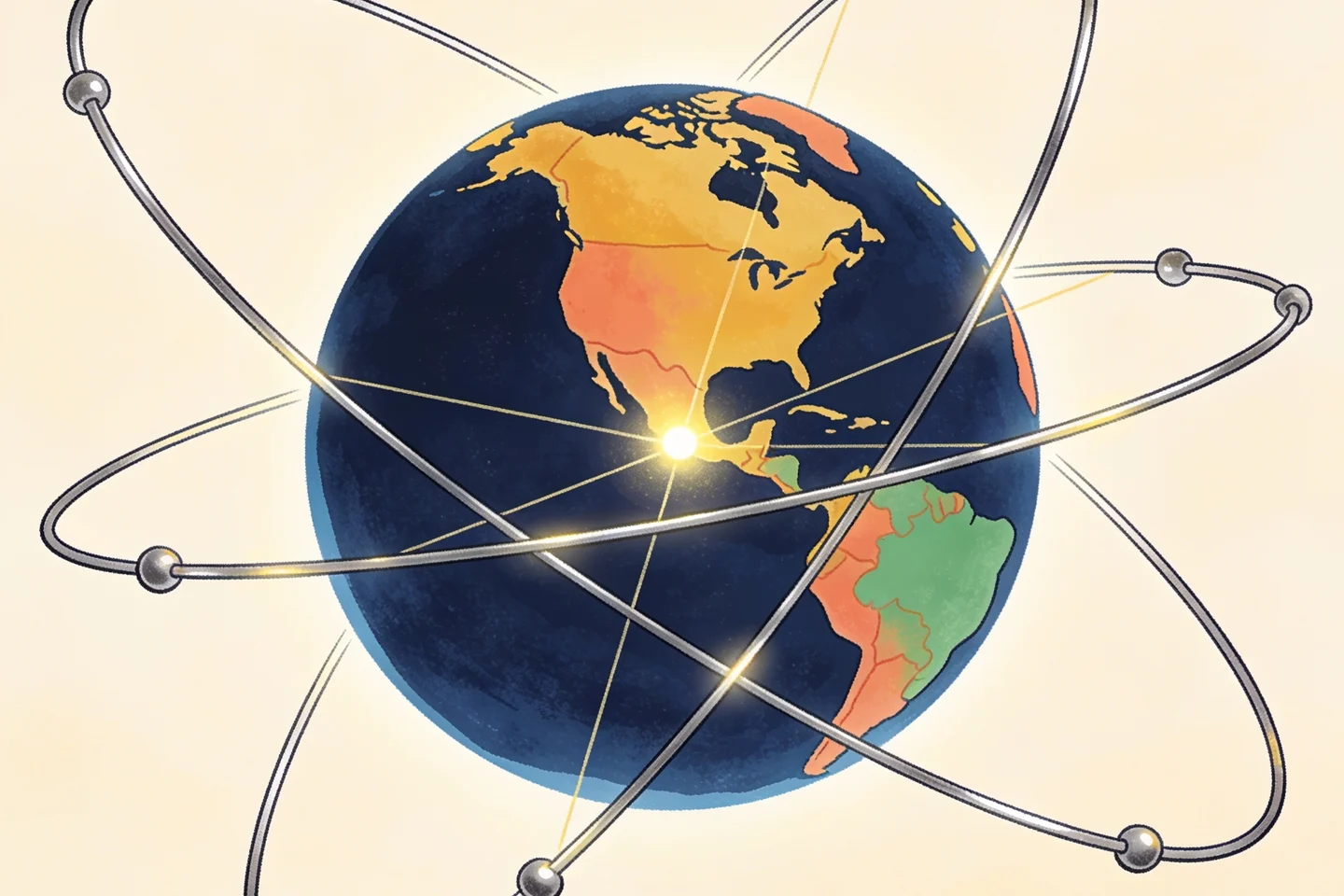
Your Eye in the Sky
- A network of orbital satellites
- Precision atomic timekeeping
Welcome. It is great to have you here to figure out how your phone always knows exactly where you are standing.
A fleet of satellites circles the Earth, constantly sending out signals about where they are at every moment.
To stay in sync, each one carries an atomic clock so precise that it only loses a second every few million years.
A World of Scouts
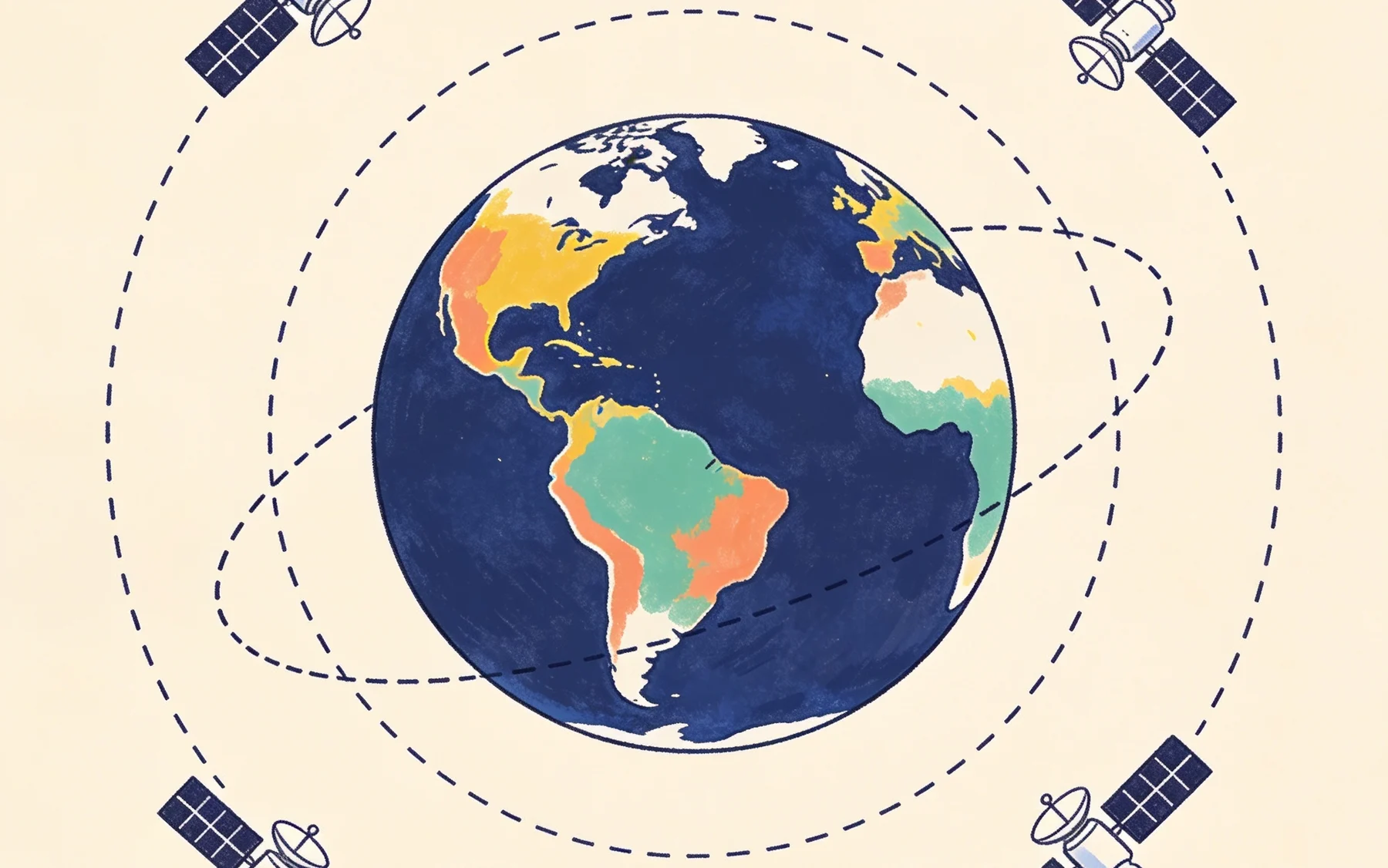
- At least 24 satellites
- Total global coverage
- Precise atomic timing
Imagine a fleet of robotic scouts, constantly circling our planet far above the clouds. These are the GPS satellites, and there are more of them up there than you might think.
To make sure your phone always has a signal, we need a massive network of at least twenty four satellites. They are spaced out so that no matter where you stand, several are always looking down at you.
These satellites zoom around the Earth twice every single day in a very specific pattern. This ensures that every inch of the globe, from the deepest valleys to the highest peaks, stays covered.
Each scout carries a super accurate atomic clock to keep perfect time. They are constantly whispering their location and the exact time back down to us. It is like a giant, invisible web made of math and radio waves, working quietly while we find our way to the grocery store.
Distance is Time
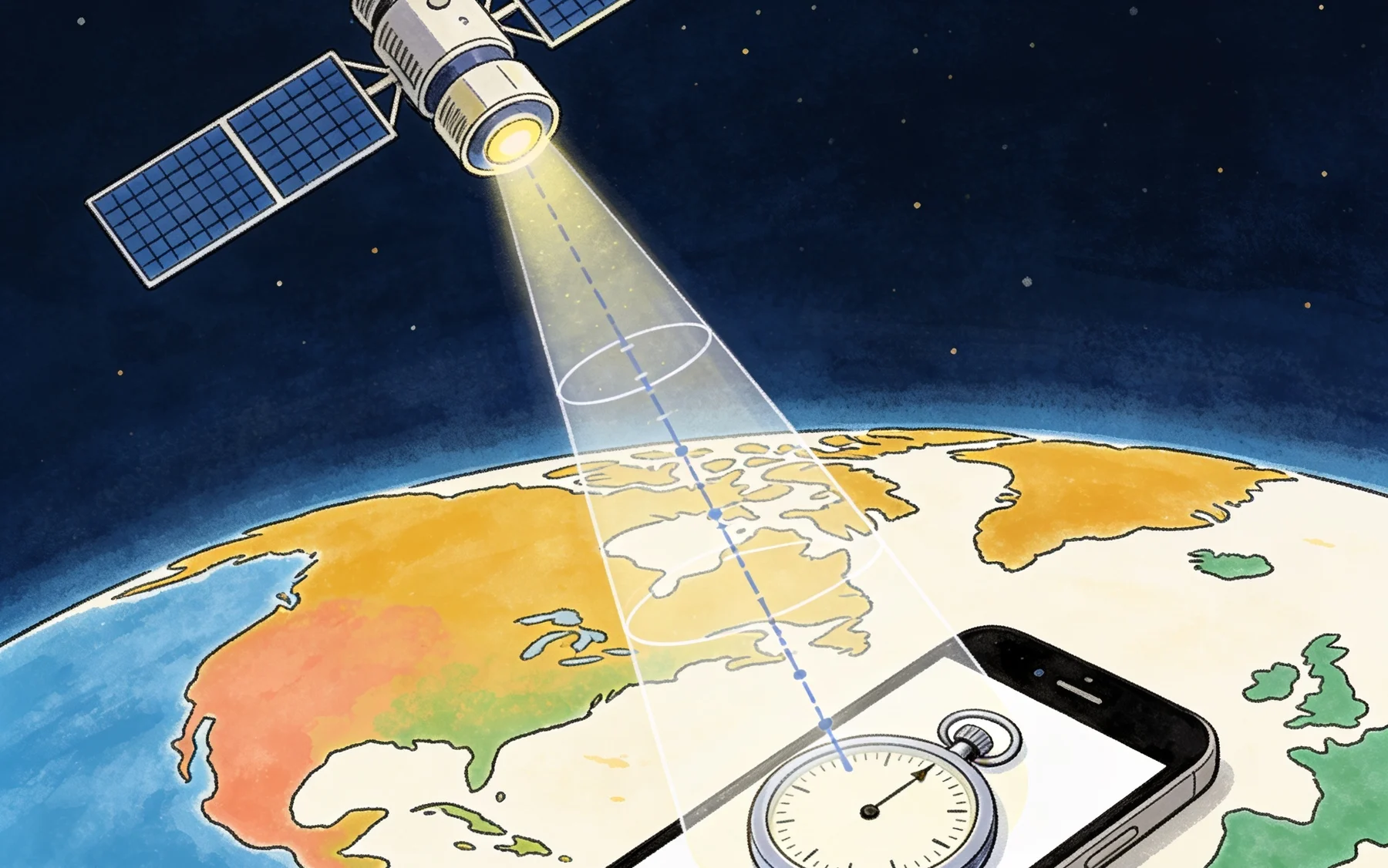
- Radio waves travel at light speed
- Satellites send a time-stamped message
- Your phone calculates the travel delay
- Time delay reveals the distance
Hey there. To figure out where you are, your phone first needs to know exactly how far away those satellites are.
It all starts with radio waves. These signals fly through space at the speed of light, which is about 186,000 miles every single second.
Each satellite beams down a message that says exactly what time the signal left. It is like a high-speed postcard with a timestamp.
Your phone checks its own clock the moment that signal arrives. By comparing the two times, it figures out how long the journey took.
Since we know the speed, that tiny slice of time tells your phone the precise distance to the satellite. Even a billionth of a second counts.
Because radio signals travel at the speed of light, your device can calculate distance by measuring the tiny delay in the arrival of the signal.
The Power of Three
- One satellite creates a sphere of possible locations
- Two satellites narrow your position to a circle
- Three satellites find two specific points
- A final check pins down your exact spot
Imagine one satellite knows you are exactly twelve thousand miles away. That means you could be anywhere on the surface of a giant bubble centered on that satellite.
Now, a second satellite adds its own distance measurement. Where those two bubbles overlap, they form a perfect circle of shared possibilities. It's getting closer, but a circle is still a lot of territory to cover. We're going to need a bit more data to really pin you down.
A third satellite adds its bubble to the mix. It slices through that circle and leaves us with only two possible points in the entire universe.
One of those points is usually way out in space, so your receiver ignores it. A final measurement confirms your exact spot right here on the ground.
The Essential Fourth Signal
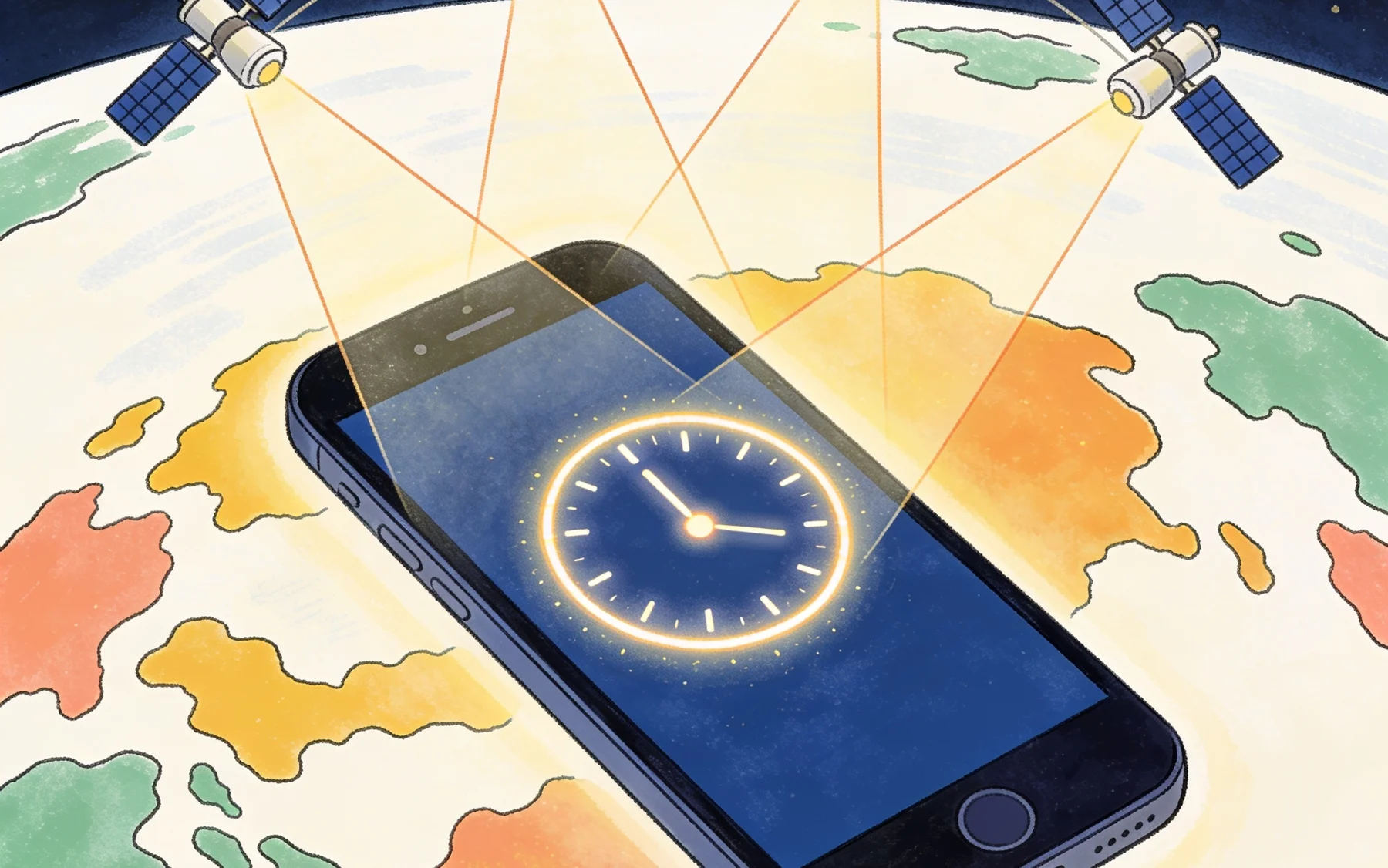
- Satellites use perfect atomic clocks
- Phone clocks are slightly inaccurate
- A fourth signal syncs the time
We've seen how three satellites can find your spot, but there's a catch. The satellites carry atomic clocks that cost a fortune and are perfectly precise.
Your phone is amazing, but it doesn't have a million dollar clock inside it. Its internal clock is just a tiny bit off compared to the satellites.
If your phone's time is even slightly wrong, the distance calculations fail. You would end up miles away from your actual location on the map.
This is why we need a fourth satellite. It provides one extra piece of data that allows your phone to calculate the exact time offset.
Once your phone uses that fourth signal to fix its own clock, everything snaps into place. You're finally synced up with the fleet overhead.
Using multiple signals allows the receiver to narrow down your position to the one place where all those distances meet.
Einstein's Special Touch
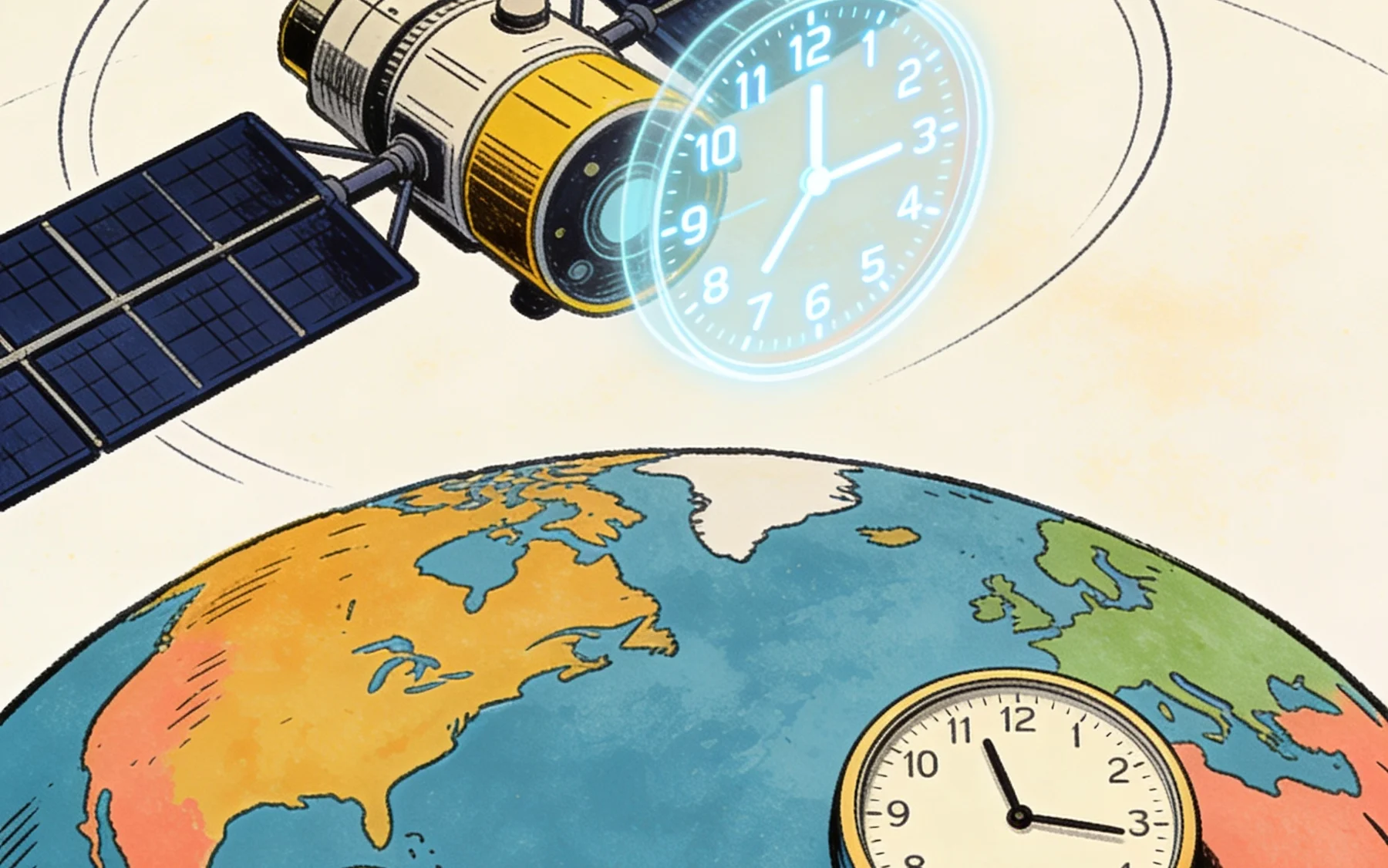
- Gravity changes clock speed
- High speed slows time
- Math keeps things synced
To tell you exactly where you are, GPS satellites have to be master timekeepers. But once you leave Earth, time stops behaving the way we expect.
Einstein figured out that gravity pulls on time itself. Up in space, where gravity is weaker, satellite clocks tick just a tiny bit faster than clocks on the ground.
There's a second twist. Because those satellites are zooming through space so fast, their motion actually makes their clocks tick a little slower.
We have to use Einstein's math to fix these differences every single day. If we didn't, your GPS would be off by miles in no time at all.
Precision From Above
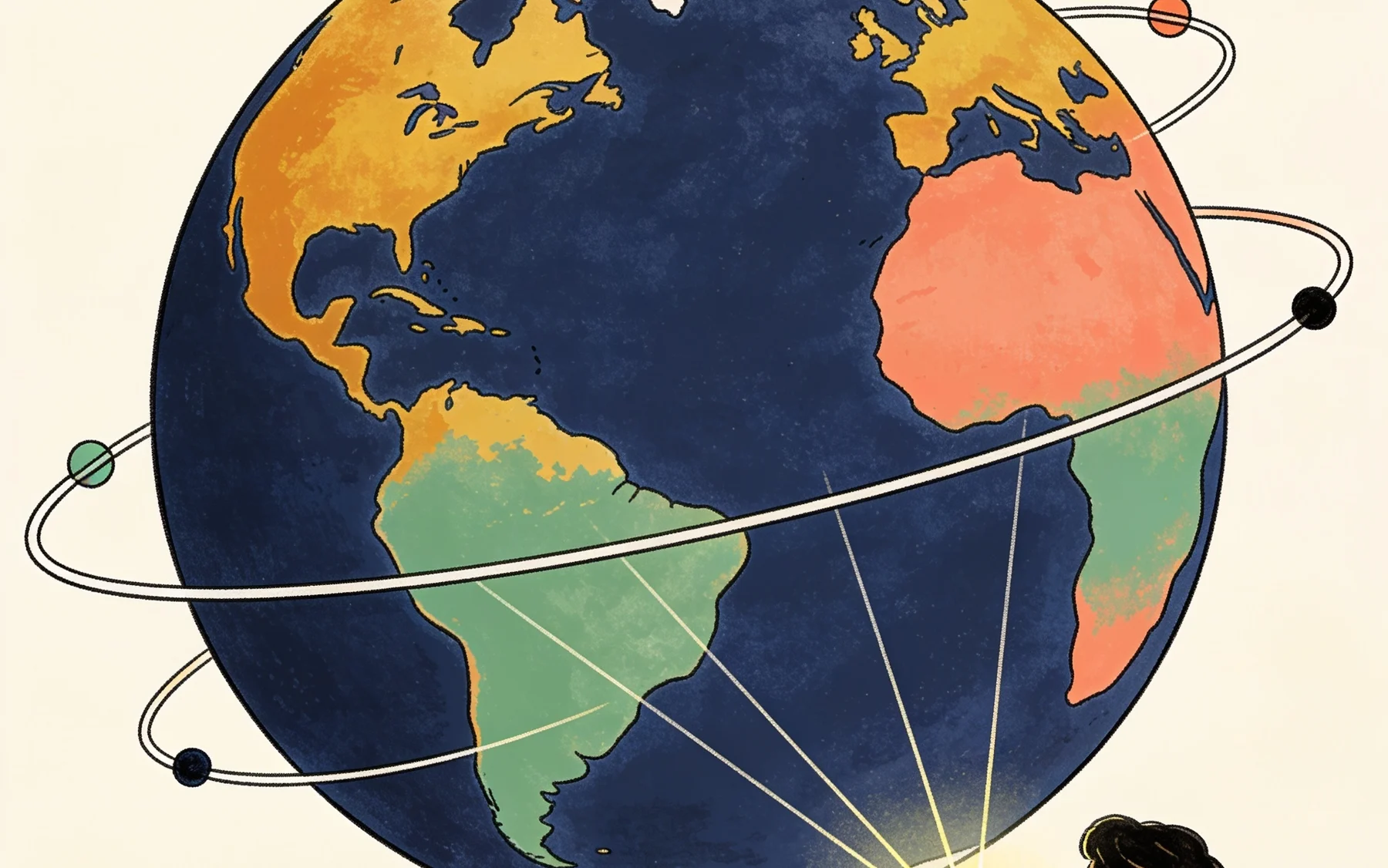
- Atomic clocks keep perfect time
- Satellites broadcast exact positions
- Receivers calculate signal travel time
- Trilateration pinpointing your location
So, we have seen how these silent sentinels above us make the modern world possible. It is a massive team effort between space and your pocket.
It all starts with those atomic clocks onboard every satellite. They are so precise they only lose a second every few million years, providing the heartbeat for the whole system.
Every satellite is constantly shouting its name and exactly where it is in the sky. It is like a global roll call that never stops, echoing across the vacuum of space.
Your phone catches these signals and measures how long they took to travel at the speed of light. Even a tiny delay tells your device exactly how many miles away each satellite is.
By drawing invisible circles around at least four satellites, your receiver finds the one point where they all overlap. That is you, standing right there on the map. From guiding ships to finding the nearest pizza place, this invisible dance keeps us all connected. You are never truly lost as long as you can look up.
Sources
Created by Curio, the Curious Fit Mind AI tutor, and screened automatically for safety. For further reading, these references cover the same subject:
- How Does GPS Work? · NASA Space Place
- Real-World Relativity: The GPS Navigation System · The Ohio State University
- Global Positioning System · Wikipedia
AI-generated lesson. See disclaimer.
You just read it.
Curio can teach this one out loud too, illustrated and narrated, with quick checks along the way.