Mastering the Visual Language: The Mechanics of Composition
Explore the structural principles that guide the eye and convey meaning in masterpieces, from Renaissance balance to Modernist tension.
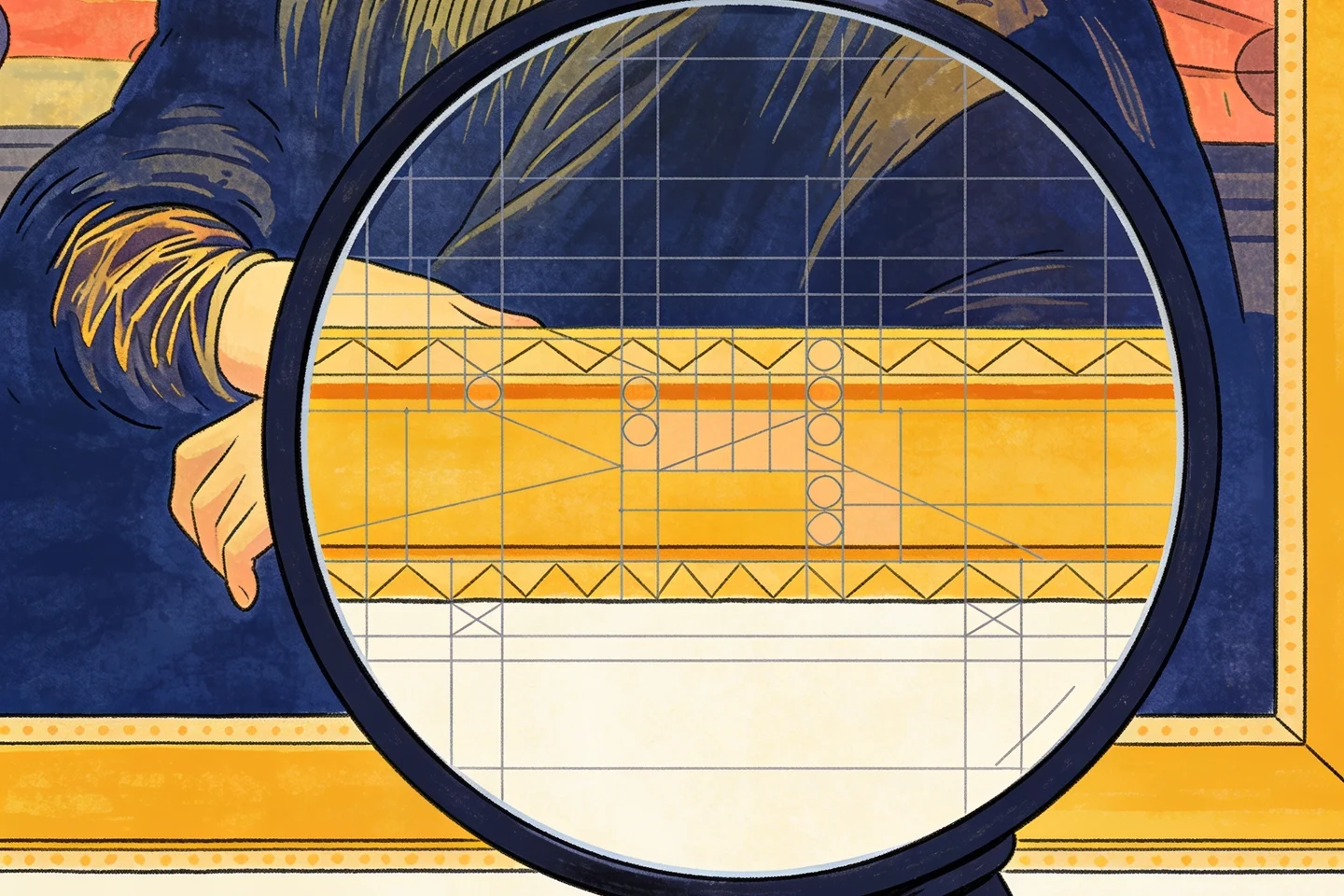
Decoding the Canvas
- Art as a structured language
- The mechanics of space and depth
Welcome. We often look at a masterpiece and feel its power, but we don't always see the hidden framework holding it together.
Think of art as a language with its own grammar. Visual literacy is about learning to read the deliberate choices an artist makes to communicate through form.
We'll focus on composition and perspective. These are the technical tools used to organize a scene and create the illusion of depth on a flat surface.
The Geometry of Beauty
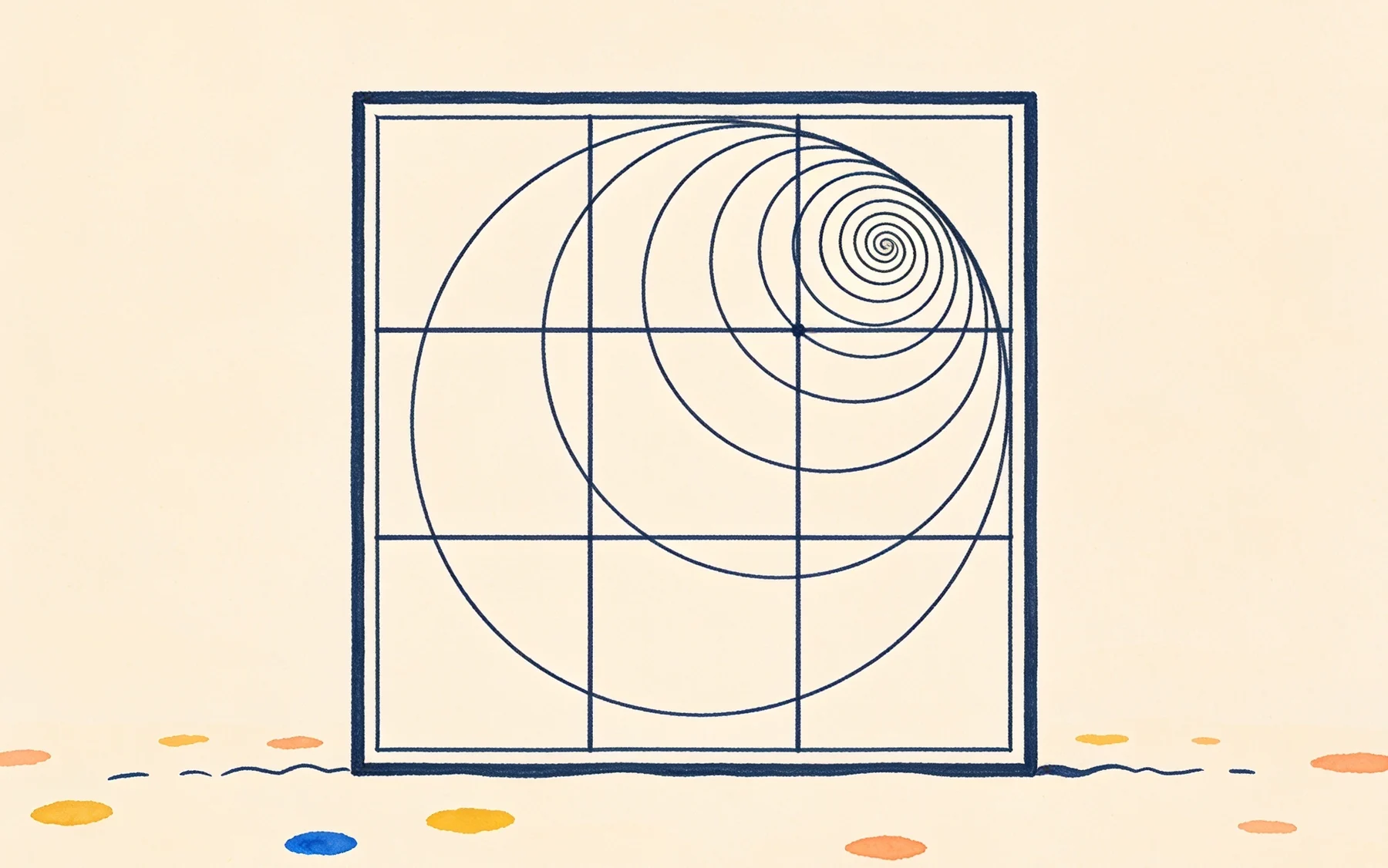
- Rule of Thirds grid placement
- Golden Ratio and organic harmony
- Fibonacci Spiral as eye path
You might think beauty is purely subjective, but your brain is actually scanning for mathematical patterns every time you look at a piece of art. We use specific geometric frameworks to guide that gaze exactly where we want it to go.
The most common tool is the Rule of Thirds, where we divide the frame into a nine part grid. Placing your subject on these lines or their intersections creates a dynamic tension that feels far more alive than a simple centered image. It is about avoiding that static, passport photo feel by giving the viewer's eye a clear path to follow across the canvas.
For a deeper level of organic harmony, we turn to the Golden Ratio, or Phi. This mathematical ratio of one to one point six one eight mirrors the growth patterns found in everything from seashells to distant galaxies.
When we map this ratio into the Fibonacci Spiral, we create a natural flow that pulls the viewer toward a specific focal point. It feels inevitable, like the eye is just following a path nature already laid out for it. Whether you choose a simple grid or a complex spiral, these structures provide the underlying skeleton that holds your visual story together.
Atmospheric Perspective

- Value compression in the distance
- Color desaturation and cooling
- Reduction of edge clarity
Have you ever noticed how distant mountains seem to melt into the sky? The atmosphere itself acts as a physical filter between you and your subject.
As objects recede, the range of light and dark narrows. This means your darkest shadows become lighter and your highlights soften, which we call value compression.
The air also scatters light, causing distant objects to lose their saturation and shift toward a cooler, paler hue. Keeping your foreground vibrant and your background muted creates a sense of vast scale.
Finally, layers of air soften the outlines of everything far away, turning crisp edges into hazy shapes. When you reserve your sharpest details for the front, you naturally guide the viewer through the space. Think of it as the world providing a natural, elegant gradient for your canvas.
Atmospheric perspective mimics how the air actually looks, making far away things look a bit hazy and blue.
Chiaroscuro and Tenebrism
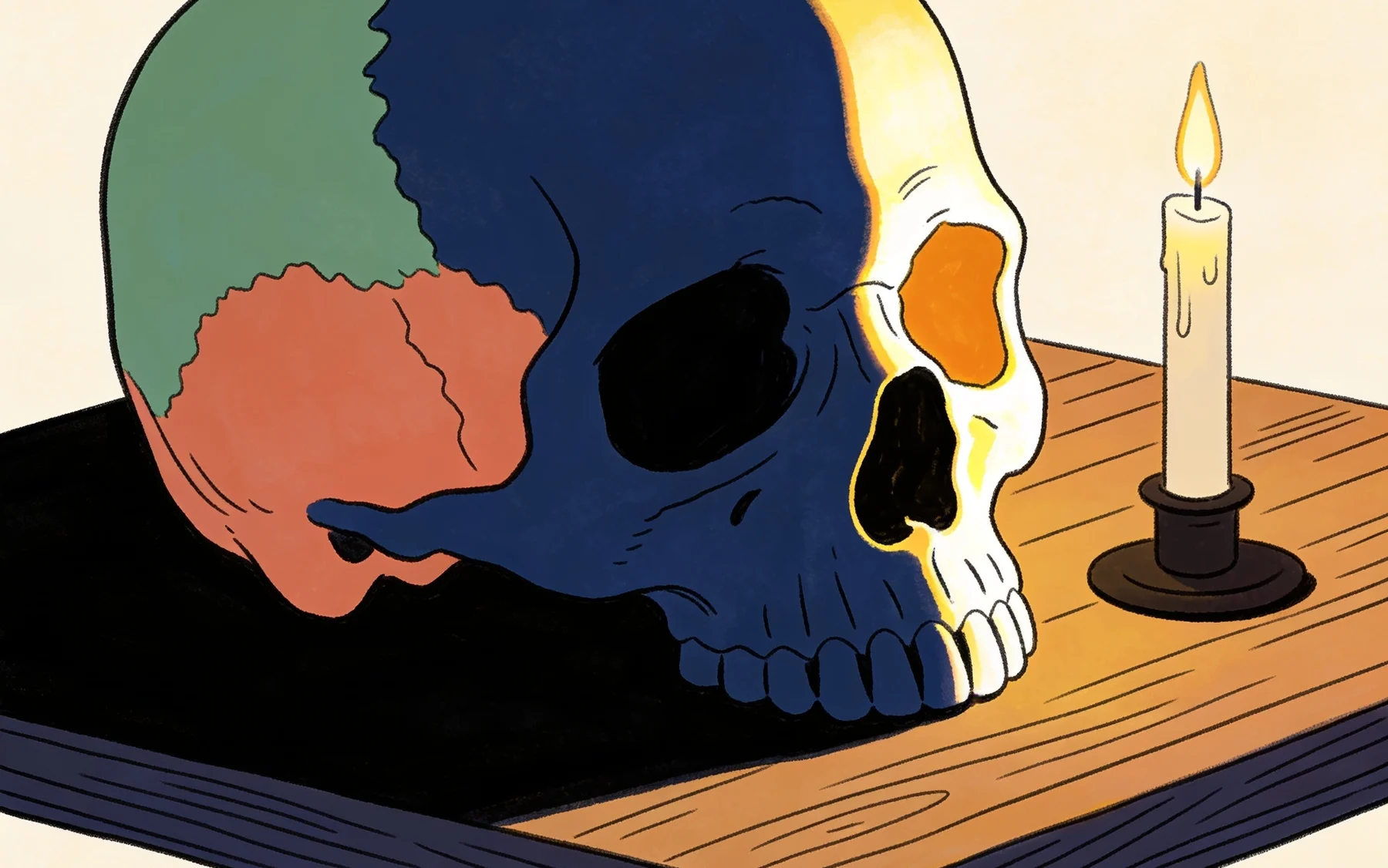
- Chiaroscuro models three-dimensional form
- Tenebrism uses extreme contrast for drama
- Shadow directs the viewer's focus
We're moving into the realm of high drama. This is where the absence of light is just as important as the presence of it.
Chiaroscuro is the technical practice of using light and dark to create the illusion of three-dimensional volume. By modulating the transitions between shadow and highlight, you give a figure a sense of physical weight.
If Chiaroscuro is a gentle conversation, Tenebrism is a shout. It involves extreme, violent contrasts where the darkness swallows the background, creating a high-stakes spotlight effect that's incredibly theatrical.
These deep shadows do more than just add mood. They act as a functional compositional tool, forcing your eye to land exactly where the artist wants you to look by hiding the rest of the world in total obscurity.
The Path to Abstraction
- Narrative representation
- Visible surface and light
- Structural geometry
- Non-objective pure form
For a long time, Western art focused on narrative realism. A painting was a window, and the composition served the story above all else.
The Impressionists changed this by emphasizing the surface. They used visible brushstrokes and light to remind you that you're looking at paint on a canvas.
Cézanne then looked for the permanent structure behind the fleeting light. He simplified nature into basic geometric shapes like cylinders and spheres. Cubism took those shapes and flattened the space even more. They showed that a painting's internal logic is more important than mimicking a single human eye.
Finally, artists like Kandinsky realized that colors and lines could stand alone. The composition became a pure exploration of form without needing a physical object.
Sharp angles and stark differences in light naturally trigger a feeling of energy or unease in our minds.
The Infinite Conversation
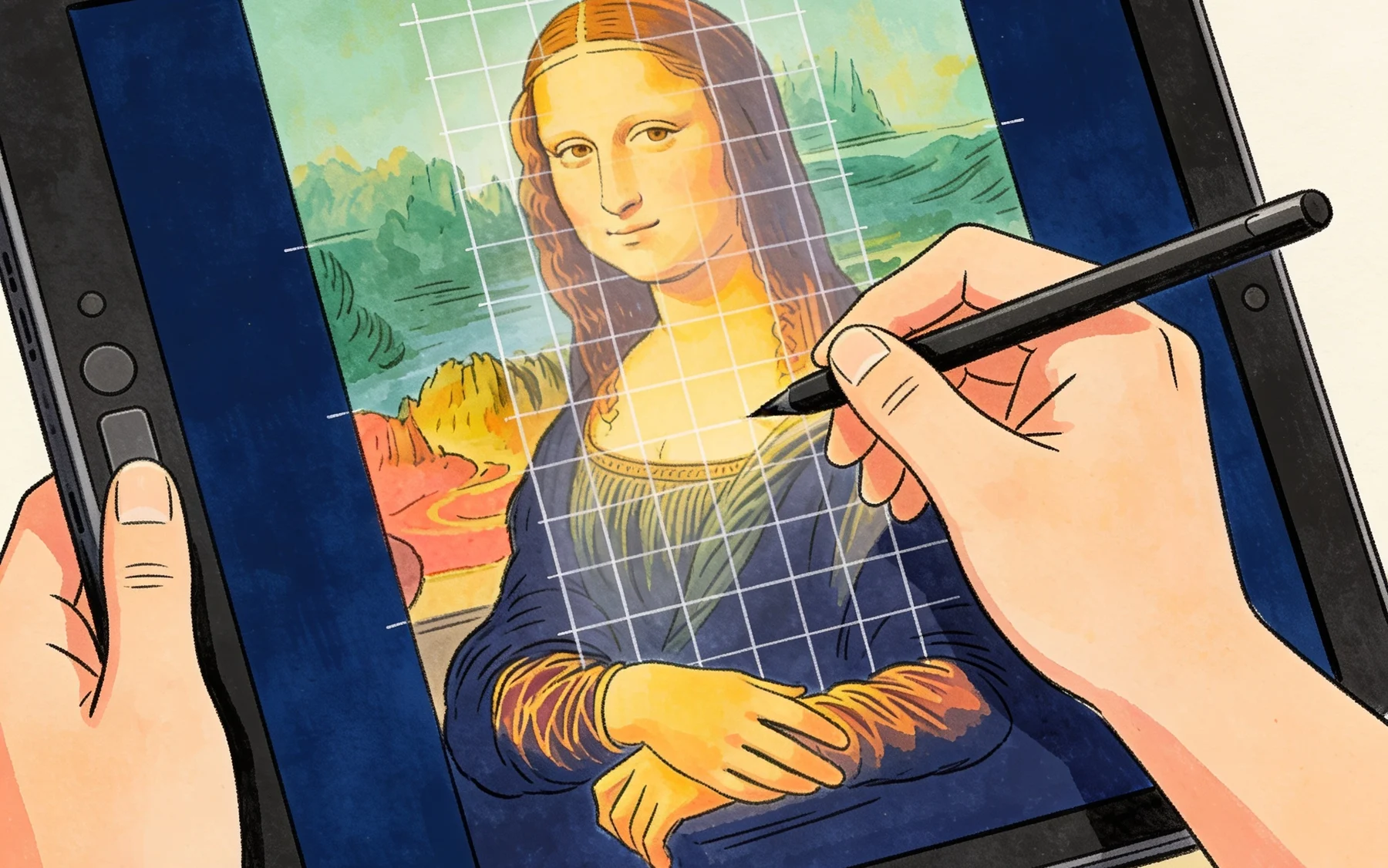
- Scaffolding for complex ideas
- Dialogue across art history
- Structure as a voice amplifier
You have spent time learning the mathematics of balance and the physics of light. Now, we see why these mechanics matter.
Technical mastery provides the scaffolding for your philosophical ideas. It transforms a simple image into a complex narrative that can hold a viewer's gaze for hours.
When you use these rules, you are joining a conversation that started centuries ago. You are speaking the same language as the masters, using geometry to echo or challenge their perspectives.
Ultimately, your technical control allows your unique voice to be heard clearly. Structure does not stifle creativity, it gives your intent a solid ground to stand on. Go forth and use these tools to build worlds that resonate far beyond the edge of the canvas.
Sources
Created by Curio, the Curious Fit Mind AI tutor, and screened automatically for safety. For further reading, these references cover the same subject:
- Composition (visual arts) · Wikipedia
- Space · Khan Academy
AI-generated lesson. See disclaimer.
You just read it.
Curio can teach this one out loud too, illustrated and narrated, with quick checks along the way.