The Science of Radiance: Aesthetic Lasers and Light
Explore how focused beams of light interact with your skin to restore, refresh, and renew.
Welcome to the Glow
- Light as a precise tool for skin health
- Targeting specific concerns with energy
Welcome. It's wonderful to have you here to explore how we use the very same energy that lights up the world to help our skin look its best.
We often think of light as just something that helps us see, but in the right hands, it's a remarkably precise tool for rejuvenation.
By focusing specific wavelengths of energy, we can gently correct imperfections and encourage the skin to repair itself from the inside out.
Selective Photothermolysis
- Wavelengths target specific colors
- Chromophores absorb light energy
- Heat destroys targets safely
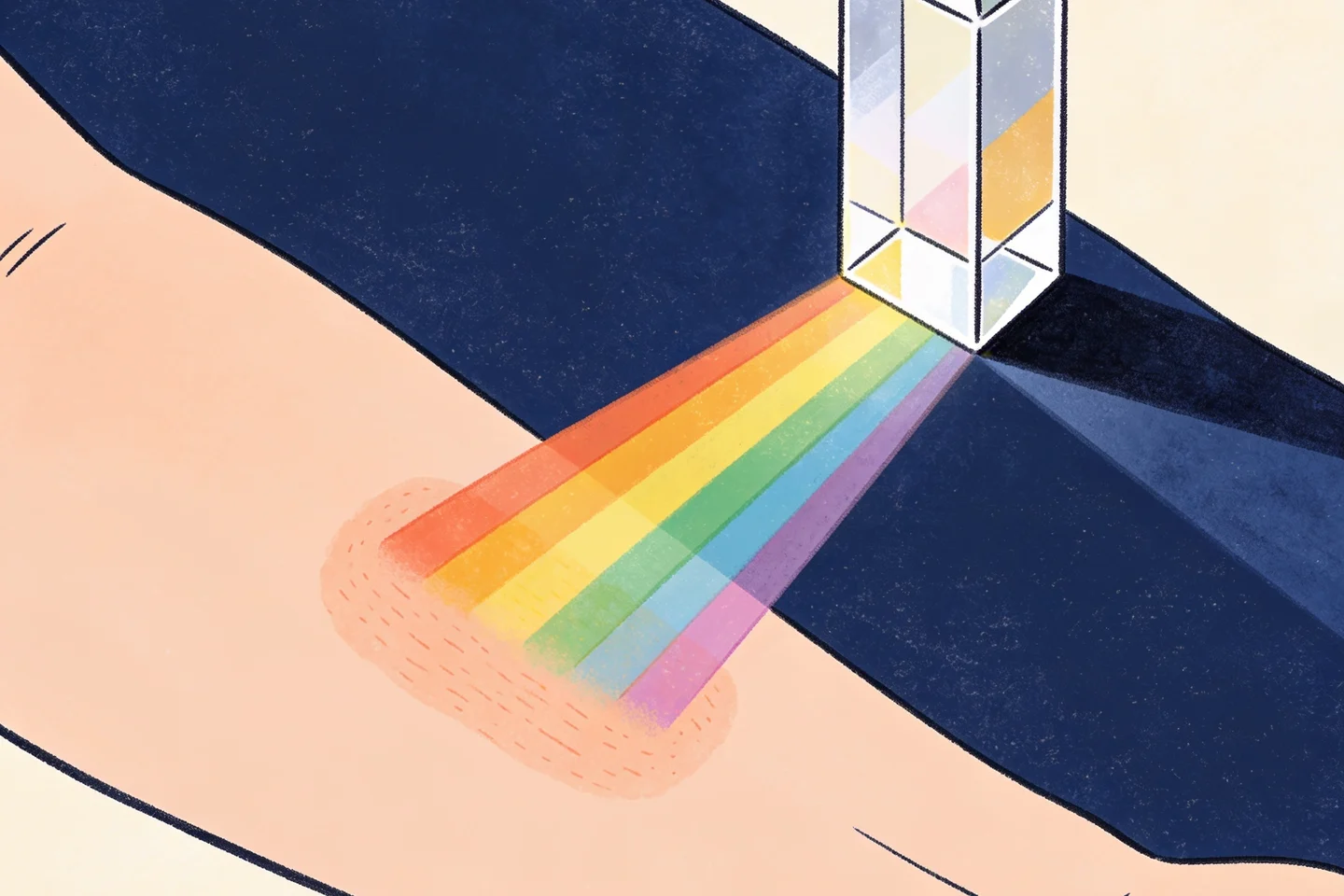
Imagine trying to pick out just the red jellybeans from a jar without touching any others. That is the basic idea behind selective photothermolysis.
Different colors in your body, like the brown of a sunspot or the red of a vein, react to different wavelengths of light. We pick a light color that only your specific target can see.
These target colors are called chromophores. They act like little sponges that soak up all that light energy while the surrounding clear skin stays perfectly cool.
Once the chromophore absorbs enough energy, it turns that light into heat. This heat shatters the pigment or vessel while leaving the healthy tissue right next to it alone. It is a precise strike. You get the results you want exactly where you need them, without any collateral damage to your skin.
Lasers vs. IPL

- Lasers use one specific wavelength
- Laser light stays in a narrow beam
- IPL uses a wide spectrum of colors
- IPL energy spreads over larger areas
Think of a laser as a specialized tool that uses just one very specific wavelength of light to do its work.
Because it is only one color, it can target a specific thing, like the pigment in a hair follicle, without affecting the skin around it.
This light is also perfectly organized, traveling in a narrow, straight line that packs a lot of energy into a tiny spot.
Intense Pulsed Light, or IPL, works more like a powerful camera flash that releases a whole rainbow of colors at once.
Instead of a tight beam, this broad spectrum energy spreads out to treat larger areas of the skin surface simultaneously.
Choosing a wavelength that only your specific target absorbs ensures the surrounding tissue stays safe and healthy.
Surface or Deep?
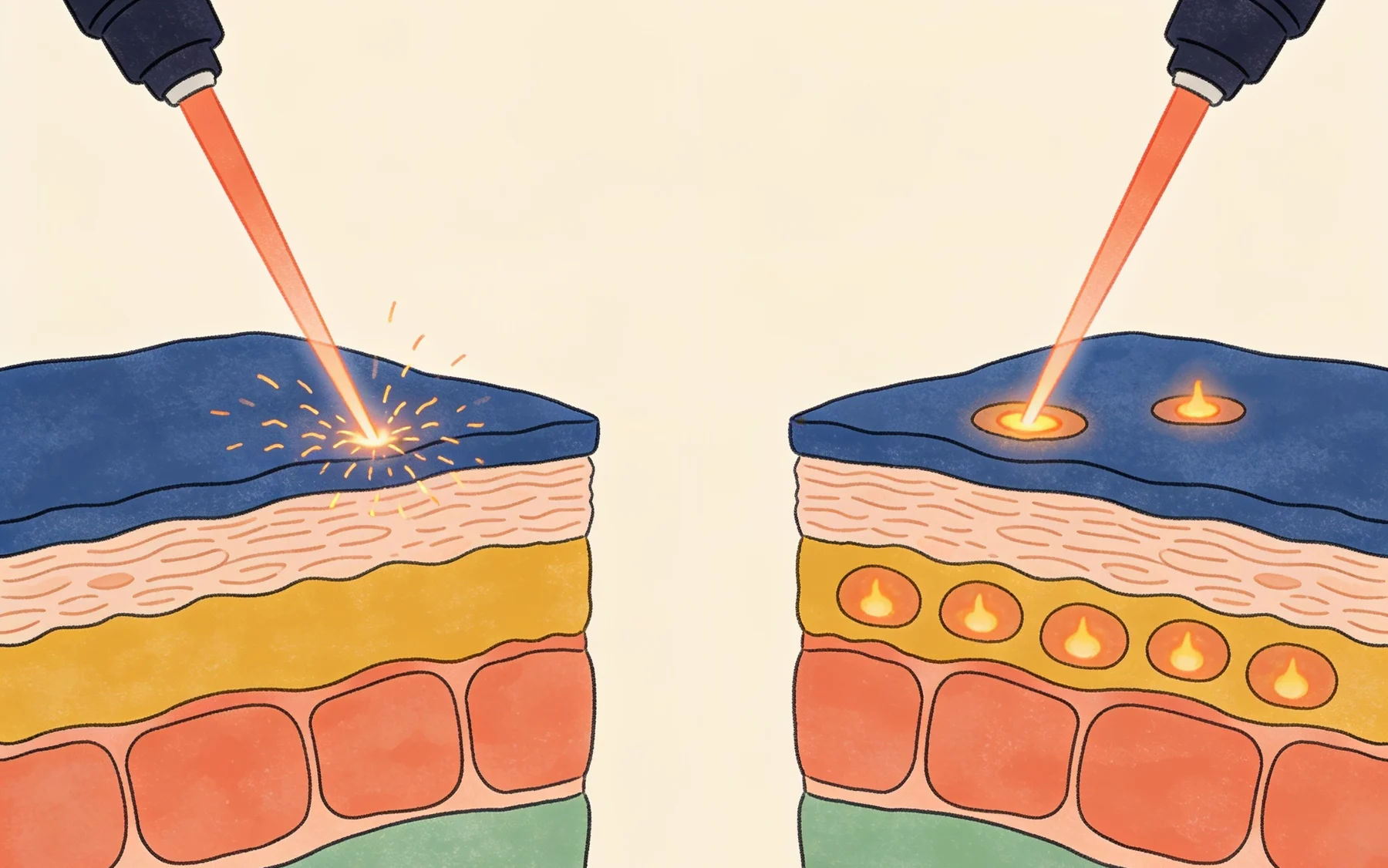
- Ablative lasers remove surface layers
- Non-ablative lasers stay beneath the surface
- Healing time depends on the depth
Think of your skin as a building that needs a renovation. We have two main ways to approach the job.
Ablative lasers are like a crew that strips away the old exterior siding. By removing the top layer of skin, they force a total reboot of the surface.
This approach is powerful for deep wrinkles, but it requires a bit of hiding away while the new skin grows back.
Non-ablative lasers are much gentler. They pass right through the surface to heat up the foundation without breaking any windows.
You get the benefits of new collagen growth from within, and you can usually go right back to your day afterward.
Waking Up Your Skin
- Controlled thermal micro-injuries
- Activation of fibroblast cells
- New collagen and elastin growth
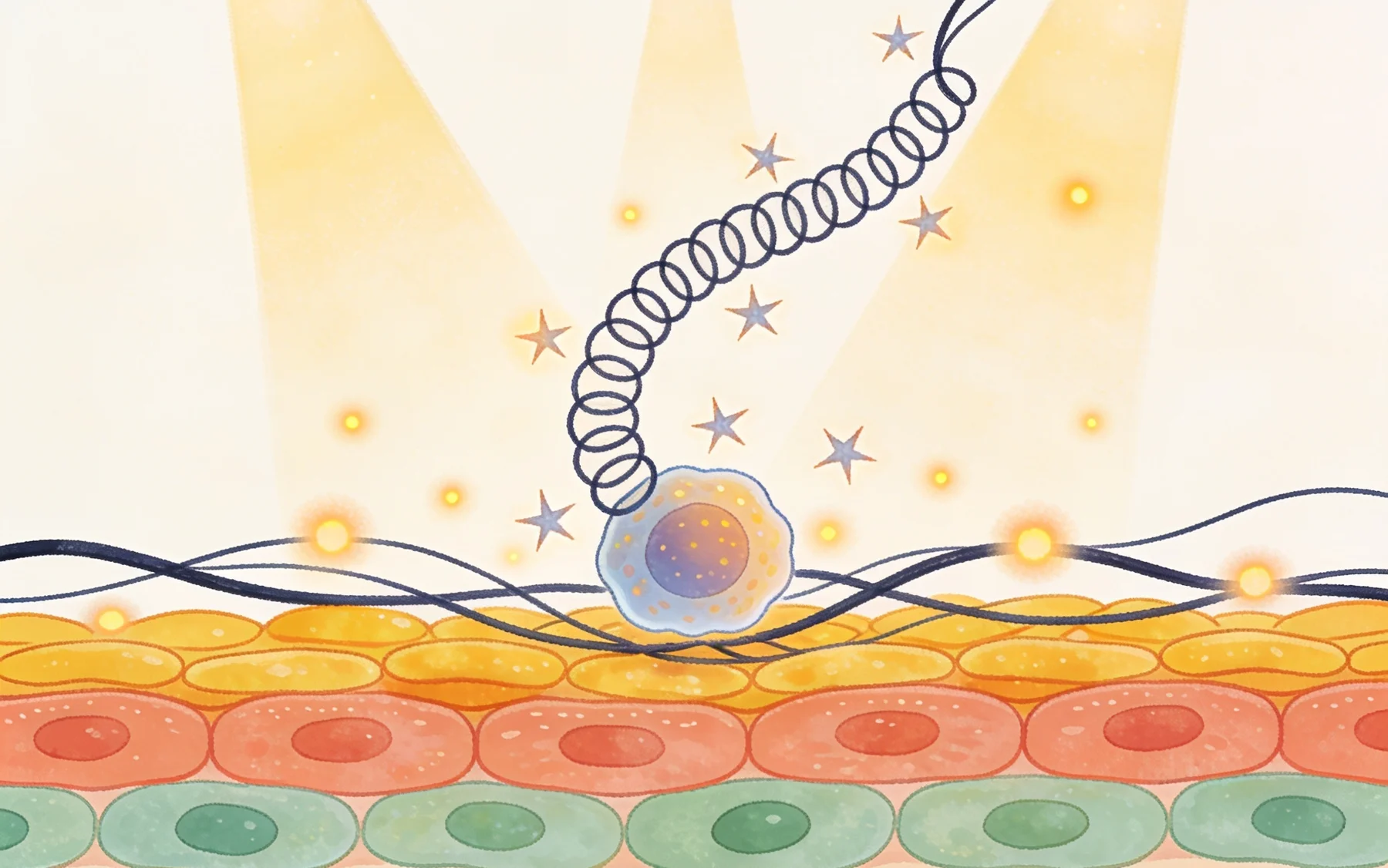
When a laser beam hits your skin, it isn't just about the surface look. It creates tiny, precise zones of heat that act like a wake-up call for your cells.
We call these controlled micro-injuries. They're small enough not to cause real damage, but significant enough to trick your body into thinking it needs to fix something.
This heat signal reaches deep down to special cells called fibroblasts. Think of them as the construction crew of your skin, always ready to get to work.
These busy fibroblasts start churning out fresh collagen and elastin. This is the structural protein that makes your skin feel firm and springy again. It is a clever bit of biological deception. We are using your body's natural healing powers to refresh your appearance from the inside out.
The laser creates a tiny bit of heat that prompts your body to wake up its natural repair systems and produce new collagen.
Your Path to Radiance
- Expert medical guidance
- Realistic healing timelines
- Consistent sun protection
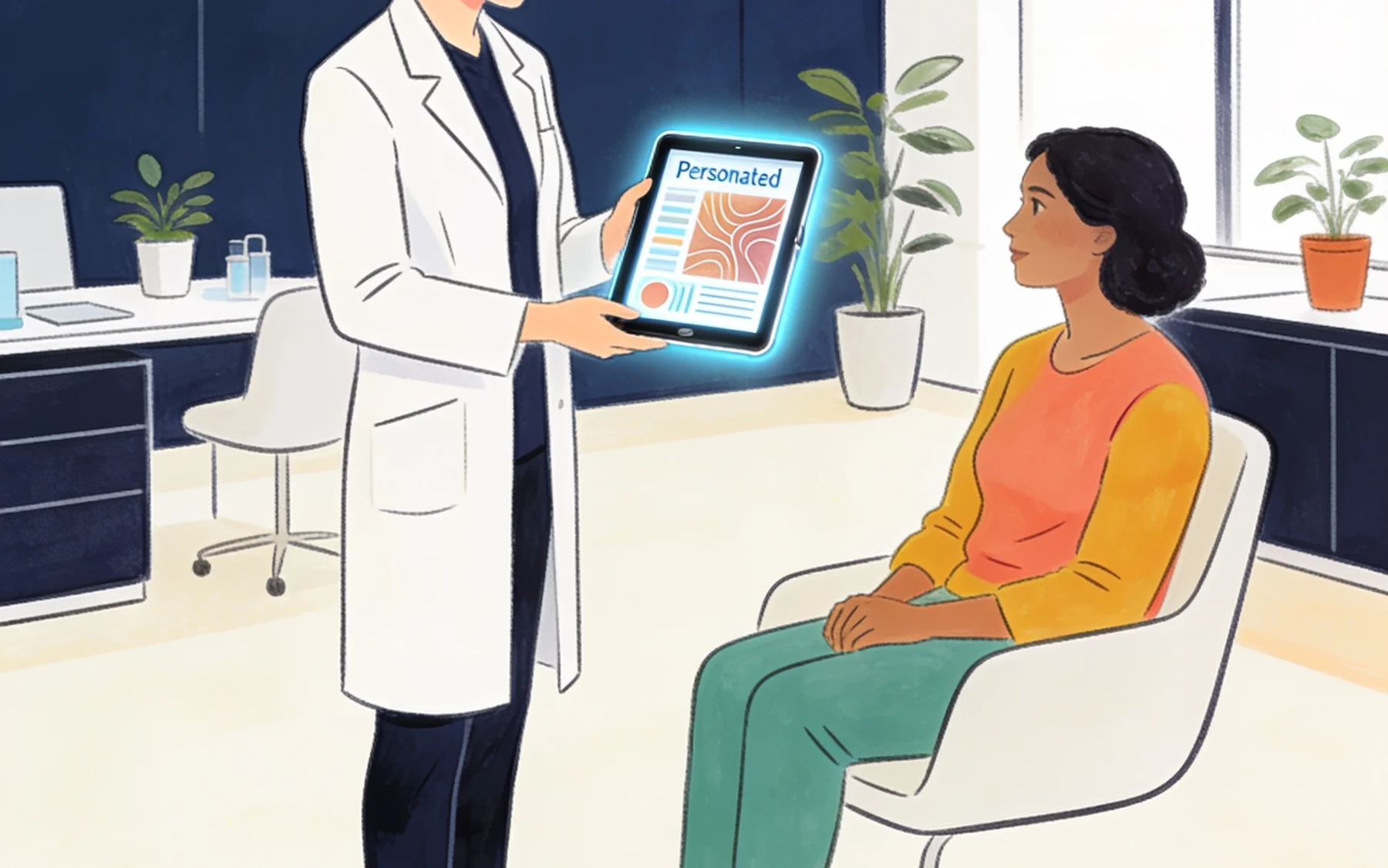
Before you start any light therapy, it's vital to sit down with a medical expert who understands your skin's history. They ensure the settings are just right for your specific needs and safety.
Think of this process as a series of steps rather than a single event. Your skin needs time to heal and rebuild its collagen between each session.
It can be hard to spot the tiny changes day by day. Keeping a photo log helps you see that beautiful transformation unfolding over the months.
Once you achieve that glow, your daily habits become the shield that guards it. Wearing sunscreen every single day is the best way to maintain the health of those fresh skin cells. Taking care of your skin is a lifelong practice of self-respect. You've done the work to understand the science, and now you're ready to shine safely.
Sources
Created by Curio, the Curious Fit Mind AI tutor, and screened automatically for safety.
AI-generated lesson. See disclaimer.
You just read it.
Curio can teach this one out loud too, illustrated and narrated, with quick checks along the way.